


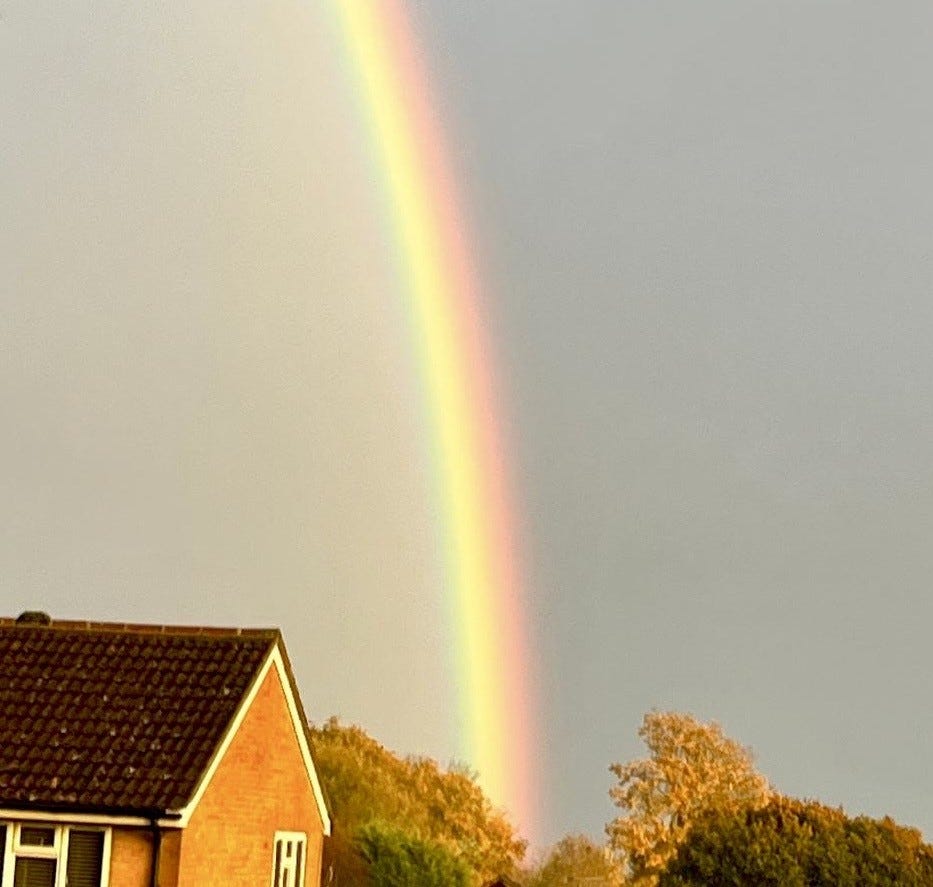
Journey in Colour began with the urge to move more slowly, to let the world reveal itself in its own time. The longer I lingered in a place, the more its character emerged, not just in its shapes or sounds, but in the colours it wore like a second skin.
From the pink clay of Marrakesh to the black-and-white of my hometown. The more I started to understand about colour, the more I appreciated its magic.
Every colour you see - the grey that flickers on your screen, the spill of light across your window, the red that clings to an apple - is a kind of mirage. It lives only in the mind, nowhere else.


Nothing Is What You Think It Is
Begin here: the chair beneath you is not as solid as it claims. Nor are you. Both are mostly space, energy gathered into patterns, trembling and shifting like water finding its way downhill. Everything is movement, everything is energy, even when it pretends to be still.
Light is energy in motion, travelling in waves of different lengths. Red stretches out, blue contracts. The sun sends these invisible messengers to earth, and when they touch the world and find your eyes, your mind quietly translates them into colour. All of this happens before you have time to notice.
Here is the strange part: your eyes carry only three keys - one for red, one for green, one for blue. With just these, your mind composes a symphony of colour, as if mixing a thousand shades from a handful of notes. Without this translation, there would be nothing but silent waves passing through space. Colour is what happens when energy is invited in and given meaning.
You Are Living in a Private World
Consider the red apple resting on the table. Light from the sun has crossed the distance, touched the apple’s skin, and found its way to you. Your mind receives this quiet message and invents the red you see. In this small exchange, you are both witness and creator.
But the red you see belongs only to you. No one else can step inside it. The colour that appears in your mind may be nothing like the one that appears in mine. We live in separate galleries, each painting our own version of the world, and yet we use the same words and pretend we are understood. The experience itself remains solitary and quietly yours.
The Illusion We Create
Once we learned the science, we began to play with the rules to make synthetic colour. The screens we stare into - phone, television, all of them, speak to our eyes in red, green, and blue, weaving the illusion of a world that isn’t really there. It is not light itself, but the memory of light, conjured in the mind. Because we have only three keys, the trick is almost perfect.
But nature is always ahead of us. Some birds carry five keys instead of three. The mantis shrimp holds sixteen. There are colours brushing past you now that you will never see, wavelengths that slip through the net of your senses. The world is infinitely more colourful than we can ever imagine.
A Brief History of Chasing Colour
For thousands of years, people have chased colour, trying to hold it still. Long before Newton split white light into its hidden spectrum, artists were already grinding earth and stone, coaxing colour from whatever nature would give. Colour became a kind of currency, traded and treasured.
I read ‘Colour’ by Victoria Finlay, who wandered the world in search of colour’s origins. She found Indian Yellow born from cows fed on mango leaves, Carmine Red pressed from insects so rare it was reserved for the wealthy and the devout. Indigo seeped from woad in the Indus Valley, Lapis Lazuli Blue from crushed stone, Tyrian Purple from the patient work of thousands of snails. Each colour carried its own story, its own cost.
Orange once came from safflower, then from madder root. It found its way into the varnish of Stradivari’s violins, and into the red tape that bound legal documents. Each colour was a record of labour and longing. But when chemistry caught up, we learned to make colour in the quiet of the laboratory, no longer needing snails or rare plants. Colour became something we could summon at will.
Why This Matters When You Travel
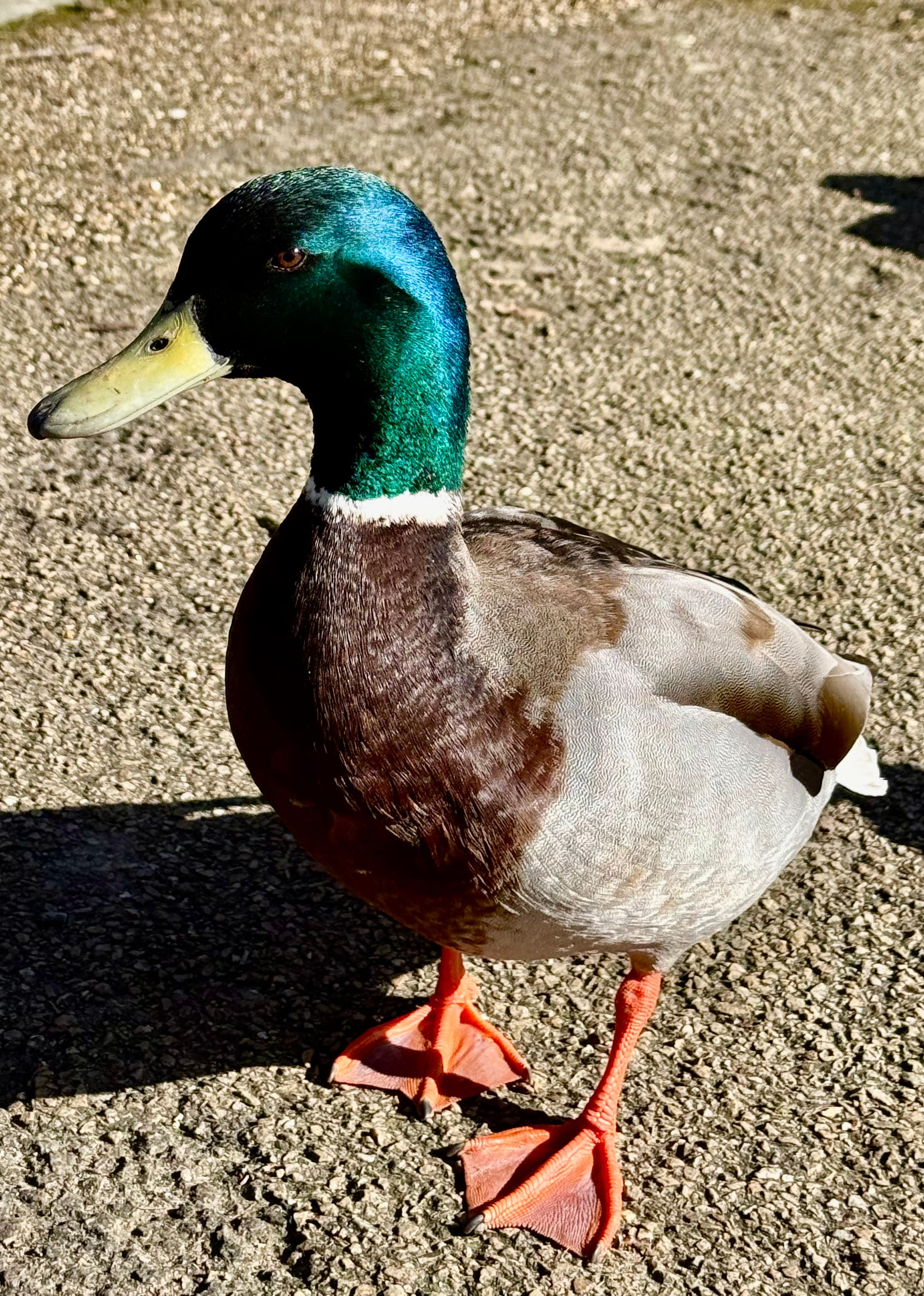
Learning where colour comes from changed the way I move through the world. On a slow walk through the grounds of a local castle, I noticed the feathers of a mallard shifting from emerald to deep violet in the sunlight - a colour that took thousands of years to invent. The red in a setting sun is light scattered and bent by the air, a private performance that happens only for you.
Now, when I travel, I find myself searching for the colours beneath the surface - wondering about the energy hidden in each wavelength, and how easily we overlook the quiet spectacle unfolding around us. I also think about the colours the earth keeps to itself, the ones our eyes will never know.
The world around you is a gallery without walls, a quiet illusion waiting to be noticed.
I loved reading this. What a way to look at things.
What a powerful reminder. I remember living in the rush of a big city, where everything felt like a blur of grey and movement. Moving to a slower life at the end of the world has been like regaining my sight. Your words about seeing the world's color only when we slow down hit home. It's not that the colors aren't there, it's that we've forgotten how to be still enough to catch them.